Thursday, October 11, 2012
Mr. Penumbra's 24-Hour Bookstore by Robin Sloan
I'd like to introduce you all to a book that blew me away earlier this month, it was a chance meeting for me, as many such fantastic books go, and I am unbelievably thankful that I spotted this book sitting on a table at my work. Picture yourself wandering a misty street in San Francisco when a tinkle of a bell and the shutting of a door catches your attention. It being late you may wonder what on earth could be open and that's when you spot the lettering engraved on the door "Penumbra's 24 Hour Bookstore". Being naturally curious, you of course cannot resist going in and finding out about this little shop and as you open the door you see the most extraordinary sight, a seemingly endless number of shelves full of book going not only into the store, but up as far as you can see. After jumping into this book and consequently finishing it in a night, I can only dream of one day finding a bookstore even remotely like Penumbras; the mystery, the intrigue, and the fascinating adventures that can unfold from a place like that are infinite. The story, characters, and plot were so remarkable that I just could not put it down and it was one of the most fun I've had reading in a long, long time.
First off let me say this is a book for book lovers. Secondly this is a book for tech lovers, and unless you have a solid balance of the two, it may be hard to truly enjoy both aspects. Instead of the standard gloom and doom and death to books scenarios that are popping up in more tech oriented books, Sloan manages to paint an almost optimistic picture of what is to come. A combination that throws open the doors of possibility and a future that I would readily live in. Another thing I should mention is that this is not science fiction nor is it even set in the future, it just has a quality about it that makes you look at the world around you in a completely different light. From how we use our phones to the latest tablets coming out, my perspective has shifted entirely.
Since this is still somewhat a mystery based novel, going into too much detail is dangerous, but suffice to say if you are a bookworm who can't put down their smartphone this is the book for you. There's a splash of romance, a dash of intrigue, a heavy dose of mystery, and top it all off with some wry humor and a fascinating set of characters which all combine to make Mr. Penumbra's 24-Hour Bookstore one of my top picks for the year thus far.
Friday, September 9, 2011
Alastair Reynolds
| The man himself! |
What type of science fiction does he write you ask? Well, that's a rather difficult question to answer, for several reasons. First and foremost, I believe he is writing in a genre all his own, sure his style is firmly rooted in hard sci-fi, but it's more than that. He has amazing characterization and storytelling, two things that many hard sci-fi authors tend to lack. His books feature grand scope comparable to some of the best space opera out there. Cyberpunk? Absolutely! Steampunk? Damn straight! Both at once? You better believe it! If it sounds hard to believe and near impossible to pull off, you would be right..... except Reynolds does flawlessly. Perhaps now you're realizing the difficulty in using an almost arbitrary system to classify such an eclectic author.
| Collection of Reynolds books only missing Terminal World |
| The Revelation Space Universe |
- Revelation Space (2000)
- Redemption Ark (2002)
- Absolution Gap (2003)
- Chasm City (2001)
- Diamond Dogs, Turquoise Days (2003)
- Galactic North (2006)
- The Prefect (2007)
- Century Rain (2004)
- Pushing Ice (2005)
- House of Suns (2008)
- Terminal World (2010)
Tuesday, June 7, 2011
A Bit About Science Fiction Sub-Genres
This started out as an email and as I was writing it I saw the blog potential. I haven't changed too much from the actual email, but I have added this and that as well as got rid of the email tone. The science fiction by its very nature is a dynamic and ever changing genre, one of the major strengths that comes from this is the unique sub-genres that emerge within the overall science fiction category. There are many, many, many candidates for a list like this, both from the past and the newly emerging works, and this list is by no means complete, but it's a good overview of a few of the more prominent representatives.
Cyberpunk - The cyberpunk genre came about back in the eighties with an amazing book called Neuromancer by William Gibson and flourished until the early nineties before falling out of grace and becoming a more obscure calling. Essentially, Cyberpunk is a response to all of the glamorous science fiction being written at the time, but more importantly a foreshadowing of events to come. Gibson was well versed in the classics, Asimov, Clarke, and Heinlein but he felt that the future would be darker and instead of the human heroes of old, the hacker would be our savior. Thus he created a world ruled by corporations instead of governments and in place of the hero there is the anti-hero, main characters that you almost hated, but loved at the same time. Cyberpunk, by definition, is gritty and very tech or as wiki puts it "High tech, low life". It is certainly one of my favorite genres, especially because of the author's foresight of how the world would end up. The heavy hitters of this little genre are as follows:
- Neuromancer by William Gibson (1984)
- Schismatrix Plus by Bruce Sterling (1985) - this one is a bit hard to track down, but it is one of the best there is.
- Snow Crash by Neal Stephenson (1992)
- Altered Carbon by Richard K. Morgan (2002) -considered post-cyberpunk, Morgan showed amazing creativity and was a breath of fresh air in a genre that almost died with the popularity of computers.
There are a quite a few more, but those four show the diversity of cyberpunk and the brilliance of a (now) defining sub-genre of science fiction.
Hard Sci-Fi – I've discussed hard sci-fi before, but it is definitely one of the major sub-genres out there and at this point one my favorites. A long time ago Asimov, Heinlein, and Clarke were on the forefront of this sub-genre even if they didn't know it. Now, though, I'm hard pressed to consider Asimov hard only because the science he was basing his novels on has been disproven or debunked, but at the time he was indeed a scientist writing fiction. Clarke, I think, fits more into the character driven styles than the hard sci-fi now, and Heinlein, well he's just all together difficult to place no matter what. In any case, some good ones today are:
- Alastair Reynolds ~ The one time astrophysicist for the European Space Agency, he retired in 2004 with the success of his first novel Revelation Space and is now pursuing writing full time. He was one of the first contemporary hard sci-fi-ists, and is by far my favorite of the group. His brilliance, though, comes not just from the hard science behind his writing, but also the character driven elements and indeed he straddles the line between Space Opera and Hard Science Fiction in a way that I've never seen before. This is amazing to me because, generally speaking, space opera tends to be on the softer side of the spectrum with its romantic and action/adventure elements. He mainly writes in the Revelation Space universe, but he also has a couple one shot novels which are fantastic.
- Kim Stanley Robinson ~ author of the Mars trilogy and probably the closest to the mark on what will eventually happen with Mars and the expansion of the human race. Robinson tackles everything from ecology to terraforming as well as some of the things many hard scientists ignore such as economy and interpersonal/international relations. I read the first book, Red Mars, while taking a 300 level Earth and Planetary Science course at UNM and was amazed at just how much I learned from reading the book, and indeed I learned a lot of things that the class completely disregarded. He has a couple other books based on the future of earth and the environment that I have yet to pick up, but I highly recommend the Mars trilogy.
Steampunk - I haven't explored the steampunk scene very much, but it is now one of the more popular sub-genres out there. While cyberpunk is high tech and low life, steampunk is almost the exact opposite flaunting low tech and high life. The main influences of steampunk, indeed the first to write in the then non-existent genre, were H.G. Wells and Jules Verne. Authors today dive back to the Victorian age of steam power and make it so the tech never evolved from steam, only got more intricate. Personally, I like cyberpunk more, but steampunk is certainly entertaining at times. Like cyberpunk, steampunk is especially suited for other mediums, in particular film and art, but it thrives best as literature. Like I said, I haven't read much, but I have found that shorter stories are better suited for steampunk, though, there are many who would disagree with me. In any case, I'm gonna list a couple of fantastic anthologies below as well as some full novels.
- The Time Machine by H.G. Wells
- 20,000 Leagues Under the Sea by Jules Verne
- Warlord of the Air by Michael Moorcock (book 1 in a great little trilogy)
- Steampunk edited by Ann VanderMeer
- Steampunk Prime edited by Mike Ashley
Also, just google "steampunk" and check out the images, there are some amazingly intricate works of everything from jewelery to computers; steampunk has an intense following nowadays.
Others - While there are quite a few more sub-genres out there, I feel like the majority of them are merely slight spins off the normal science fiction genre, space westerns are ever prevalent in film and literature, but I find that it is just a more focused vision of a space opera. Others such as alternate history and military sci-fi while fairly large in scope hold little interest to me. Instead I think now is as good a time as any to jump into the future of science fiction by exploring some of the stuff that has yet to be labeled and is starting all sorts of ruckus in the field.
- The Windup Girl by Paolo Bacigalupi; Ribofunk by Paul Di Filippo; and the Xenogenesis trilogy by Octavia E. Butler ~ These three are all follow in the footsteps of cyberpunk and are what is now being called biopunk. Instead of the cyber elements being the focus and because of the recent advancements in biotechnology, a new sub-genre is set to spring forth focusing on genetic modifications, biohackers, and what happens when we mess with our genes. Alastair Reynolds actually touches on this sort of modification in his universe, and while not the focus, his take is interesting. Bacigalupi, in particular is quite extraordinary in his vision.
- The Unincorporated Man by Dani and Eytan Kollin ~ This one is extremely interesting in that it deals more with the socio/political/economic future than the conventional sci-fi elements. It's quite a bit dystopia (or utopia depending on if you agree or not), and while not the best nor most well written or well structured book, I think the Kollins have started something that will lead down some unique paths. Indeed, I don't know what to "label" it as, but then again it's just one of those novels that years from now will be cited as the pebble that started the wave of "X" sub-genre.
- Wraeththu by Storm Constantine ~ God, I don't even know where to start with this one. I picked it up on a very high recommendation and if you only read one book on this list this may be the one to go with. It is the only book I haven't been able to fully classify as science fiction or fantasy because it is neither and it is both. It has so many different themes packed into it that it was easy to become absolutely entranced by it. The main theme, if I can indeed pin one down, is that of gender and gender roles which, as you know, is something very,very rarely touched upon in the male dominated science fiction genre. If I may be so bold, I would say that while reading this I must have felt as those who read Tolkien or Clark for the first time, it was so different than anything I had ever read, but yet absolutely amazing. Sadly, the first novel in this series (it's now sold in a large omnibus) was published in 1987 and yet 25 years later it is still one of the only books tackling this subject. I believe it may be one of those things that is almost too much to handle for most people and while we have progressed as a nation and a society, many people are still unable to read about the blurring of gender roles into one, but I think it will become huge when it does take off. For now I recommend it to everyone, just for the eye opening experience.
- Infoquake by David Louis Edelman ~ Another brand new idea, this time focusing on the future of business and corporations. Instead of the dark views of cyberpunk and biopunk, Edelman has a very different take on what the future will be and as time goes on I can actually see it. Instead of the corporations of today what emerges are called fiefcorps that only last several months at best before the CEO types switch to another product. Nanobots are the name of the game and using them to enhance/change the human body is the goal. While it almost sounds like biopunk, the focus is not just the changing, but he business behind it. Great character and plot development as well, the Infoquake future, while unlikely in certain regards, may have hit the bulls-eye in many ways, especially economically.
I believe without a doubt that while many of these will be around in the future, the greatest thing about science fiction is that it is ever changing; right when you think you've read all there is to read something new and unbelievable comes up and completely blows you away and reignites your desire to read. Certainly the best novels are those written with no specific format in mind, for those are the books that create the sub-genres everyone tries to fit themselves into.
Tuesday, April 19, 2011
Among Thieves by Douglas Hulick
Kickass cover isn't it? I've said this before, but that old saying "don't judge a book by its cover" is sometimes just flat out wrong. For example, I would never have picked up Brent Weeks or Alastair Reynolds if it wasn't for their amazing cover art. Although, sometimes there are books that have such atrocious cover that, even if the content is excellent inside, I just cannot bring myself to read it. Alas, that is a blog for another time. Part of the reason I randomly picked Among Thieves was because it looked like good old fashion fun and that is exactly what it was too! Before I go on let me quote Brent Weeks:
"Among Thieves is an unalloyed pleasure: a fast moving, funny, twisting tale in an evocative setting with great characters. The kind of story that reminds you why you love to read. This book may just give you that feeling you had the first time you read Rothfuss or Abercrombie: Oh hell yeah, there's new talent in the game. Read this book. No really, read this book."
I can't fully agree with this description because Patrick Rothfuss is on a whole different level than Hulick, but I will say that he does remind you of why you love to read. You see, it feels like the Fantasy realm has plenty of High Fantasy and Epic Fantasy and such, but where are the anti-hero's? Where are the Han Solos and Mal Reynolds in fantasy? Oh they're there, but they're usually poorly written or straight copies of Han. This was part of the reason I loved Brent Weeks so much, his Night Angel Trilogy showed us the dark side of fantasy, it showed us that not everything is elves prancing through the forest, but there is a rich, unexplored underworld that far too many authors ignore. Weeks focused on assassins, Hulick on just about everything else! We are introduced to Drothe just as he's finishing up torturing a rat and from there we learn he is one of the many Kin, aka the criminal underworld of the Empire. Each of the Kin belongs to a different boss and does different things from the simplest purse cutters to the elite Blade's who are the paid assassins of this particular world. Our man Drothe is what is called a Nose, he sifts through the rumors and separates fact from fiction from the masses on the street, the closest I can get to describe his particular occupation is that of a spy, but it doesn't quite cut it. Hulick introduces everything that's needed for a solid fantasy, a great magic system, distinctly believable characters, some of the most accurate sword and weapon play I've had the pleasure to read, and a world that is almost endless number of stories and ends perfectly, leaving you wanting more, but without the horrifying cliffhangers many authors seem to think is best when writing a series.
Certainly, Among Thieves is not a literary masterpiece the likes of Tolkien or Rothfuss, but at the same time I don't think a book focusing on the underworld should be written in such a way. Honestly, the reason I love science fiction and fantasy is because a book can be written in any style without having to be held to silly standards that were set a hundred years ago. Fantasy has that unique talent for being fun without having to analyze every single word and every single theme, you just read for the pure joy of reading and Hulick does this flawlessly. It does have its faults, as all debut books do, but the pace and action of the story leave you flying through pages well into the night like an addict. On the whole I truly believe that Hulick has written a refreshing addition to the fantasy world and I look forward to future tales.
Tuesday, August 17, 2010
Ry Recommends II
This blog as been on my mind for a while now, but until recently I haven't had the motivation to actually do it. I've kept a list of book's I wanted to put in here, but that's as far as I got. In my first recommendation blog, I listed them all alphabetically, which was a good tactic, but after giving it some thought I think it would be best to do it by genre and then alphabetically within each little group. This mainly spawns from the fact that there are a couple specific sub-genres I want to talk about. Without further ado:
Fantasy:
- The Magicians by Lev Grossman ~ I already posted a review of this one some time ago, but I feel it is my duty to mention again just based on the level of badassness involved with this novel. Check out the review for more info, but this is one everyone needs to read.
- The Name of the Wind by Patrick Rothfuss ~ I have been putting off doing any sort of review for this book for some time because I've had the hope that he'd actually put out the rest of the trilogy. Alas, since it's been nearly two years since this book came out, I think I'll do something small now. I will write a full review when I re-read it, but for now what I can say is that this is by far one of the best fantasy novels to come out in years. In fact, I cannot believe the pure luck that was involved when I picked up this book. It was the end of March, I had a Hastings gift certificate for $25 burning a hole in my pocket (this was pre-borders, I don't think I've bought a book from Hastings in ages), so I was wondering around, just kind of looking. I noticed the cover of this book first off, to hell with the old saying "don't judge a book by its cover", because had it not caught my eye I wouldn't have picked it up til much later. In any case, The Name of the Wind was on a display of featured, new hardbacks, the thing that caught me was the fact that it was the only fantasy book to have made it on this little display, which is rare in and of itself. So I picked it up and proceeded to read the cover slip. Honestly, I didn't know what to expect, but I was intrigued and after having spent a good thirty minutes in there, I made the hasty decision to give it a shot. After all, it wasn't really my money anyway. Like I said, I am so freaking lucky I did because when I got home I entered a world of magic and intrigue the likes of which I have seen but rarely. Tolkien, Feist, and maybe one or two others write to this caliber, but Rothfuss is brand new! This was his first ever book and it was fantastic! I can't give too many details only because I read it quite a while back and they're becoming vague, but what I can say is that Kvothe (pronounced like quothe 'sept with the K) is one of the most fascinating characters I have encountered. Essentially, Kvothe has gone into hiding from his glorious past, but at the start of the book he is found by a man who reveals that he knows Kvothe and wishes to hear his story and from there begins the miraculous story of Kvothe's life. It has everything, romance, heartbreak, action, mystery, and every other emotion that can be described and on top of it all, it is one of the most well written books I've seen! Oh and the author is a complete badass! First go pick up The Name of the Wind, then read it from start to finish (it's that hard to put down), and then go to Patrick's Blog to get the latest news and updates concerning book two. I am absolutely serious, if you like fantasy at all, hell even if you don't, go read this book. Update: The release date has finally been announced and set in stone, March 1st, 2011!
Fiction:
- The Heart is a Lonely Hunter
by Carson McCullers ~ Ah, I still remember walking through Borders with Kimberley just kind of looking around. I don't dislike Fiction/Literature per say, but it isn't something I read very much on my own. Indeed, the majority of the Fiction/Lit books I've read have been for school or recommended to me by friends. The same is true for McCullers book, as we were wandering, me with my big pile of sci-fi/fantasy, she remembers one of her friends really enjoying the book. I pick it up, scoff a little, but in the end I give in. Boy am I glad I did too! The Heart is a Lonely Hunter is one of those rare masterpieces that absolutely touch the heart and soul. The even more amazing thing about this novel is the fact that it was McCullers debut work and not only hit the best seller chart in 1940, but was named one of Time's greatest books 1923-2005. The story follows a deaf man named John Singer and the four seemingly average people he befriends. At first it seems like a story about Singer himself, and a good portion of the novel does follow him in particular, but you quickly get the sense that these average people each have their own demons and events that shape their lives. The characters each have so much depth and appeal that I am doing them a grave injustice in my descriptions, but trust me, they're each unique and utterly familiar: Mick Kelly the young, tom boyish girl; Biff Brannon the owner of Singers favorite restaurant; Doctor Benedict Copeland the idealistic, small town black doctor; and Jake Blount the alcoholic who can't seem to keep himself out of trouble. The story in and of itself is a so simple that there is now real way for me to give much detail without ruining it, but it is a masterful work of character study and hit's even the most cynical deep in the heart. Whether you read sci-fi/fantasy, mystery, or even non-fiction, I think The Heart is a Lonely Hunter is a must read. - Dismantled by Jennifer McMahon ~ This book was one I didn't have much faith in at first, but not 20 pages in and I was hooked I have always noticed McMahon on the shelf because she has a habit of putting really, really creepy little girls on her covers, indeed I had picked up several of her books just out of curiosity. It wasn't until I read the back of Dismantled though that I decided to take the plunge. It seemed like a pretty interesting story, well written, and something both Kimberley and I would enjoy, little did I know that it was spectacular. Dismantled was haunting in a way that I've never experienced before. Even after thinking about the book for a few weeks, I still cannot put my finger on it adequately. It wasn't horror, no, far from it, but at the same time it was.. well, haunting is the perfect word for it. Unfortunately, due to the fairly mysterious nature of the book I can't say much, but I can say that Dismantled will take you on a roller coaster ride of emotion, chills, and finally you'll be blindsided by an ending that explains all, but leaves you wondering too.
- The Shadow of the Wind by Carlos Ruiz Zafón ~ Oh dear I can't stress this one enough, obviously, by far one of the best novels I have had the good graces to read. Definitely a top ten!
Horror:
- It by Stephen King ~ This is probably the first and last time you'll hear me say this, but I was wrong back in August when I wrote about L. Ron Hubbard's Battlefield Earth. I quote:
"First and foremost I believe that you have to be very pompous and pretentious in order to write a book that is over a thousand pages. There is just too much story for one book. Period. No matter how good you are at writing, no matter how good you think you may be at storytelling, you cannot write a satisfactory story that is over a thousand pages. You just can't. There is just too much story and by not splitting it up into a sequel or trilogy, you lose valuable plot and world building options."
Stephen Kings It comes out to be a beastly 1104 pages long and I have to submit that it was damn good! Perhaps Hubbard really was really just a wretched storyteller or maybe it was the type of story, but in any case I had a blast reading It the whole way through. Not only was the story good, but it was horribly creepy! Scary may not be the right word, but damn did I have a hell of a time trying to read it in the wee hours of the night. I started the books with the movie adaptation floating around my head—if you're a horror junky the theatrical version of It is probably one of the best horror movies ever made (amazing I know)—and while the movie was indeed great, this book was amazing. The character development, the progression of the plot, and even the rather large time gap proved to me, once again, just how much of a master King is. Perhaps in a full-fledged post I can go into the amount of detail that this book really needs, but really if you're in the mood for something scary and have lots of time on your hands Stephen King's It is quite possibly one of the best horror novels I've yet to read. - The Stand by Stephen King ~ Now that I've read several books over a thousand pages in length I know for a fact that L. Ron Hubbard is just a terrible author. Sure his story was okay, but like I said in the full post, it could have been done in 300-500 pages at most. In any case, Stephen King has blown my mind again! As I read more of him, well his early stuff anyway, I've come to realize just how lucky we are to have such a prolific author writing in our generation. Not only does King address social issues in a way that's actually interesting to read about, but he wraps it all up into some of the creepiest stories ever. The Stand is only different in that regard, it is creepy, but for completely different reasons, this is more Nineteen Eighty Four creepy in the sense it could actually happen. Ringing in at 1168 pages, The Stand is the classic post-apocalyptic book, while the sub-genre has been around since the '40's, King is a must read! I suppose it would be more accurate to call this one a horror-fantasy, but at the same time the major theme of the book is the character study rather than the looming good versus evil battle. The characters are written in such a way that you cannot help but find yourself in all of them, the good and, horrifyingly, the evil. The only true downside I can see with The Stand is that it is somewhat dated, so some of the pop culture references were lost on me, but seeing as the story is about the end of the world as we know it, those pop references become vaguer and vaguer, and eventually lose all meaning as society tries to re-create itself. If you have even an inkling of interest in the post-apocalyptic sub-genre this is definitely a must read, especially since many of the later books in the field reference King heavily.
Mystery / Thriller
- Soul Runner by Jon Guenther ~ Kimberley introduced me to this author who just so happens to be one of her coworkers and although there are some major flaws, they have nothing to do with his writing as a whole. In fact, one of the reasons I've decided to add this book to the list is because, while I'm definitely not religious, I was able to look past that and see a rather intriguing story. The story follows Dr. Abram "Bram" Aronsfeld an ex-Hasidic Jew who also happens to be what is called a "Soul Runner". Around the world there are still places that reject Christianity and the job of a "Soul Runner" is to travel to these hostile countries and literally save Christians being persecuted there. The story has some great action scenes and honestly the idea is one that is somewhat new to me. I've always looked at Christianity as the persecutor not the persecutee and it was really fascinating to see the roles reversed. A fair warning though, every page, at least, has some sort of quote from the bible or Bram praising the lord, plus it seems that every other character Bram meets he converts into Christianity and "saves their soul". Hence the reason I had some major trouble with this book. Religious themes aside, the idea behind Soul Runner is a unique and fascinating one full of adventure and thrills. Think of it as a kinda religious spy novel. Worth picking up if you can ignore (or if you're into) the religion part.
- Tyrannosaur Canyon by Douglass Preston ~ This is another one I have already written about, but one that I feel needs mentioning again!
Non-Fiction:
The Paranormal -
Over the last year I've read several paranormal books analyzed in the realm of science and journalism. I love myth and the whole metaphysical stuff, but the books I'm going to mention below will meet the approval of even the most skeptical. Plus, they were a good old fashion fun.
- The Men Who Stare at Goats by Jon Ronson ~ Okay, well this one may not hold up to all the skeptics out there, but Jon Ronson did an excellent job with his investigations. The major problem with The Men Who Stare at Goats is the fact that it is damn hard to get any sort of useful information out of government and military personnel. Sure, many of the people Ronson interviewed were more than willing to talk, but they were all so... vague that many people probably have a hard time not dismissing such claims as mere conspiracy theories. It's true, many of the points Ronson was suggesting are... strange... but I can't quite dismiss it. Years and years ago I read a biography called Psychic Warrior written by David Morehouse detailed many of the same ideas presented by Ronson. It is really hard to say which side if the fence I fall on here because while I cannot dismiss the number of people who back up these claims, it's just hard for me to imagine a five star general trying, over and over, to walk through his office wall (only to smack his face in it time and time again). But at the same time if indeed such amazing feats were possible why wouldn't the military and government try and research it? It puts a whole new spin on war, if you have soldiers that can walk through any and all defensive structures and then proceed to drop you with just a look, who would mess with that army? Not to mention just the very application of remote viewing--meaning purposefully going out of body to real world, real time locations--in the spying world is tremendous. Whether or not they succeeded? Well that's up for debate. Even if they had, knowing our government, they wouldn't bother telling us no matter the civilian applications. All in all, though, Ronson does a damn good job breaking down a major claim, into more manageable and, at the same time, believable chunks. This one is definitely worth a read, but it should definitely be taken with a grain of salt and an open mind. Plus, of all the conspiracy type books out there, Ronson has an amazing sense of humor which makes The Men Who Stare at Goats amazingly readable.
- The Science of Vampires by Katherine M. Ramsland ~ Oh my long lasting love of vampires has finally panned out to more than just the fiction/horror shelves. I, first and foremost, have to applaud Katherine Ramsland's sheer force of will, vampire myths and tales have been around since the Egyptians, and just plodding through all that information takes more sanity than I even have. Anyone who may question the actual science of this book need only to look at Ramslands credentials: a masters degree in Forensic Psychology, another masters degree in Clinical Psychology, and on top of that a PhD in Philosophy—yes, yes, it's not science, but what PhD biologist would lower their pompous selves down to study vampires or the supernatural?--plus she's worked with FBI profilers to boot. So armed with her already vast academic knowledge and an almost obsessive eye for research, Ramsland takes apart each of the main myths associated with vampires. For example, she theorizes just how an actual entity might be able to consume pure blood with no ill effects, explores conditions which might explain why vampires cannot come out during the day, as well as takes a stab at what profiling a vampire's personality, and, of course, explores the question of whether or not vampires use their reproductive organs--Sorry Cullen fans their junk is for show only--as well as vampire sexuality in general. On top of all this research she interviews forensic experts as well as people who associate with the so called vampire sub-culture. This may not be of interest to any of the new vampire fans (those that only like vampires because of Stephanie Meyer) both because it came out in 2002 as well as she stays with the more traditional vampiric roles. In fact I believe she would agree in saying that vampires do not glitter, sparkle, or go to high school over and over again. What she does do is introduce and attempt to explain the myths behind vampires in a logical, scientific manner, which in the realm of vampires is a breath of fresh air. Anyone who is interested in many of the traditional myths behind vampires and would like to explore a more scientific route than that of speculative metaphysics should check out Katherine Ramslands The Science of Vampires. For those that are interested in less "out there" concepts Ramsland also has a host of books in the True Crime CSI realm as well which I'll vouch for.
- Spook by Mary Roach ~ Mary Roach, you will never cease to amaze me in your brilliance, you hooked me in with your wry humor and solid facts in Stiff, and now you appeal to my paranormal side with Spook, not to mention I have Bonk just waiting on my shelf. In Spook Mary Roach approaches the idea of the afterlife, not from the religious or theoretical point of view, but from the scientific "I need hard facts damn it" view. Roach approaches the vast field of the afterlife in several ways: Historically she looks at the major fascination with séances back in the early 1900s, culturally she dives into the different theories behind the afterlife including the Indian reincarnation (this is an excellent part of the book because she actually travels to India to follow a doctor studying reincarnated kids), she jumps across the pond and attends a psychic school in order to learn how to communicate with the dead, and then even goes on to explore medical doctors attempting to get evidence for near death experiences. She does all of this with a hilarious sense of humor and a hard headed determination for facts. Whether or not you are interested at all with the paranormal or you're an avid psychic looking for ways to prove yourself, Mary Roach hits the mark with Spook.
- Witch in the Waiting Room by Robert Bobrow ~ This one was especially fun to read because I have a crazy goal of becoming a doctor someday, well a psychiatrist, but still. Basically what Dr. Bobrow did was go through hundreds and hundreds of academic journals for paranormal type stuff. We're talking ghosts, reincarnation, near death experiences, the whole lot! I was actually rather surprised with the sheer amount of material he found, especially seeing as this is coming from academic journals known to be very, well, academic and anti-paranormal. The other great thing about The Witch in the Waiting Room is the very fact that Robert Bobrow is an M.D. and has been practicing medicine for over thirty years, so he knows his shit! This is really, really important when it comes to the writing because, as most college students know, academic journals are generally written in a not very user friendly way, especially medical ones. Dr. Bobrow takes these journals and gives a nice summery in layman terms, but with enough professionalism for the reader to know he's experienced in the field. Dr. Bobrows book is excellent for those super skeptics out there because it uses only peer-reviewed journals and has all the citation information listed in the back. Not to mention, as is common knowledge, doctors are generally really well respected when it comes to facts and scientific credibility, so medical journals are some of the harder journals to get published in. You'll honestly be surprised at some of the fascinating material doctors have been writing about for years, and if they believe in this stuff, is it so hard for you to as well? I should stress, though, that this is merely a brief look into the paranormal; if you consider yourself an "expert" in this sort of stuff you may find things here that you already know. Plus, because there are so many different concepts looked at in this book it does not go as in depth as some out there would like, but it is a great introduction to the paranormal based on fact rather than Sylvia Browne / David Icke "fact".
Science Fiction:
Cyberpunk –
I discovered cyberpunk over two years ago when one of my managers introduced me to the book Snow Crash by Neal Stephenson and it didn't take long for me to become hooked. Essentially cyberpunk is described as combining "high tech and low life" (again thank you wiki) and more than likely the only exposure most people have had with it are through the Matrix Trilogy. Sadly, the Matrix can only be considered cyberpunk in the most general of ways, fringe cyberpunk if you will. You get the idea though, hackers have become the rulers of a somewhat post-apocalyptic somewhat dystopian future and the internet, well the internet has become a beastie all its own. Alas, it is horribly hard to describe in terms that make people actually want to check it out, so I'll just move on with the books and let you decide from there.
- Hardwired by Walter Jon Williams ~ Of all the cyberpunk books I read over last winter break this was my least favorite, but just the fact that it is on this list means that it was still something special. Williams is, as I found out, a somewhat local author here in Albuquerque, indeed he is in a writing group with Melinda Snodgrass, George R. R. Martin, and S. M. Stirling so he has an amazing group to throw ideas at. The only thing I did not like about Hardwired was the southwest-ness of it, growing up here I have no love for cowboys or adobe or any of the stuff that many from the east find so alluring, but I can still recognize that many do. Hell, much of the American mythology is based upon the Cowboy and the frontier. Setting that aside, Hardwired was cyber-military-punk so a lot of the book focused on the military applications of the cybernetics. In the case of Hardwired, the main character, named Cowboy -.-, is an outlaw smuggling goods across the country which as divided into city states. This is done by piloting panzers, but not the panzers of our grandparents, but catlike vehicles that run across the landscape. The piloting is done by jacking into the panzer itself which gives you the ability to "see" what the panzer sees and "feel" what the panzer feels. There is a tremendously well written story behind this theme, a very anti-corporation/government story! Cyberpunk generally focuses around the personal applications of technology whereas Hardwired strays somewhat and focuses more on outlaw/military application. Definitely worth the read, especially if you've blown threw other cyberpunks and would like to see different applications of such technology.
- Neuromancer by William Gibson ~ Wow, just trying to write about this book is daunting. It isn't very long, but holy shit! William Gibson is the inventor of cyberpunk and Neuromancer is the most quintessential cyberpunk novel ever written. Many science fiction books written after, many movies, and much of pop culture has been influenced by William Gibson, he almost singlehandedly invented what we think of as the internet today, and insanely he didn't know a thing about computers! Technically the Neuromancer is a trilogy, but even if you don't read the other two, but Neuromancer is essential to any sort of literary list. If you're just curious about what cyberpunk is, but don't want to have to sort through everything that's out there, or even the other books on this list, pick up Neuromancer because, really, everything that came after is heavily, heavily, influenced by this piece of work. If that doesn't sway you to read it then know this: it won the "triple crown" of sci-fi awards in its day, The Nebula Award, The Phillip K. Dick Award, and The Hugo Award. In other words, the top three science fiction honors a book can ever receive, most are lucky to even get one! The plot is complex and beyond my ability to summarize in the way this book deserves, so instead, just go buy it.
- Schismatrix Plus by Bruce Sterling ~ I picked up this book based solely on Alastair Reynolds insane props:
"I owe an equally obvious debt to Bruce Sterling, whose 'Shaper/Mechanist' sequence blew my mind on several levels. Sterling's future history, even though it consists of only a single novel and a handful of stories, still feels utterly plausible to me twenty years after I first encountered it. Part of me wishes Sterling would write more 'Shaper/Mechanist' stories; another part of me admires him precisely for not doing so. Read Schismatrix if you haven't already done so: it will melt your face."
That is exactly what it did too, melt my face. I still remember when I finished it, I honestly sat there for 30 minutes utterly stunned by what I had just read. This isn't typical cyberpunk either, but it was written a year after Nueromancer and was also one of the books that has heavily influenced and defined what cyberpunk has become. Schismatrix Plus is everything ever written about the 'Shaper/Mechanist' Universe. It includes every short story as well as the full length novel Schismatrix, what's more is that it is all arranged in the way the Sterling intended it to be read. It is difficult, abstract, and intense beyond anything I could have imagined, but when you finish, you will utterly agree with Reynolds description.
- The Takashi Kovaks Novels by Richard K. Morgan ~ Ah, one of the only modern day authors to still write classic cyberpunk! I discovered Morgans' novels while reading a list of the best cyberpunk novels and anything that is listed alongside Gibson and Stephenson is worth checking out in my book. The 'first' book in the series is Altered Carbon. I put first in quotes because while all three novels are technically related (same main character, same universe, same tech), they have very little relation besides that. Indeed, each of the three novels explores three different types of cyberpunk. Altered Carbon, my favorite of the three, is the classic cyberpunk format, part mystery, part anti-government, part dystopian, but all intense. Broken Angels, the second book written, is of the more militaristic style of Hardwired and yet it also resembles modern day sci-fi, but still fundamentally cyberpunk. And the third, Woken Furies, is a mash up of everything, military, cyberpunk, hard sci-fi, soft sci-fi, and everything in-between! I found this approach amazing because you got to see the technology introduced in Altered Carbon in very diverse circumstances, whereas with books like Neuromancer and Snow Crash, you could see other uses than the novel outlines, but not clearly. The main tech found in this universe is the ability to store your entire personality within a cortical stack which allows you to "re-sleeve" into a new body with all your memories and personality intact. This alone has such intense connotations that I am amazed at just the pure possibilities of such a technology; studies on gender, identity, death, life, love, everything! Morgan explores all of these themes flawlessly in his three books and creates the classic cyberpunk antihero, Takashi Kovaks! You love him, you hate him, you wish you could be him! I feel like Morgan has picked up the mantle from the classics listed above and turned it on its head, exploring themes Gibson could only dream about, creating technology Stephenson would be in awe of, and military action that Williams would be proud of. While cyberpunk may be a niche genre liked by a few hardcore fans, Richard K. Morgan makes it accessible to every science fiction fan and introduces cyberpunk to a generation that may overlook it just based on the fact that cyberpunk was a huge movement in the '80s before slowly dying out in the '90s.
Overall though Cyberpunk is one of my absolute favorite genres, it combines amazing dystopian themes without being dated, it has just enough action to make it realistic without overdoing it, it rings true for the future, in some ways more than many other science fiction does, and creates characters that are realistic in a way that shows us that ideas such as "good" and "bad" are merely within the continuum of humanity.
Friday, April 2, 2010
The Shadow of the Wind by Carlos Ruiz Zafón
As usual, I was somewhat skeptical of this book when I heard of it, but after hearing recommendations not only from customers I trust, but from one of my coworkers that is as much of a bookworm as me, I relented and decided to but it. I've had The Shadow of the Wind on my 'to read' shelf since mid-December, but it wasn't until recently that I finally picked it up. Let me tell you, dear reader, that as much as I love my sci-fi/fantasy, this book blew me away! I don't know what it is with Spanish and Portuguese authors*, but they just have this poetic way with words that, not only makes reading their books a delight, but adds so much to the plot that it almost makes it hard to read poorly written American prose! Alas, it is actually rather difficult to even quantify this book as just "fiction" because it's so much more! Mystery, romance, tragedy, and suspense! All of them wrapped up into an amazingly poetic tale! The setting, as I mentioned earlier, is the 1940's Barcelona, Spain which adds a whole other dimension to this already epic novel! While reading The Shadow of the Wind, the reader is also taking a tour of historical Spain just after the Spanish Civil War, a time of bloody fighting and terror! The great thing, though, is that the reader need not be a Spanish historian to understand and enjoy the story--this should be obvious seeing as I am about as far from being considered a Spanish historian as I am from being a Olympic figure skater. Indeed, far from turning the average reader off from the historical significance, I believe that the book will intrigue and fascinate everyone to the point of doing a bit of research! I can honestly say that, though I've always wanted to go to Spain, it hasn't been very high up on my list until now. I would give anything right now to hit the streets of Barcelona with a copy of this book! Speaking of which, at the very end of the novel the author includes a walking tour of Barcelona so you can see all the sites described in the book. Though some are, of course, fabricated, I think it would be so cool to wander the streets and see these places that inspired the book! Indeed this type of thing has only recently become stupendously popular with Dan Brown's novels--you can take countless paid tours of The Da Vinci Code and Angels & Demons in Italy and rumor has it that there are The Lost Symbol Tours springing up in D.C. as well.
Alas, the very nature of The Shadow of the Wind makes it extremely difficult to talk much of the plot without giving away spoilers, but suffice to say there are things in this book that surprised even me! I hate to be cryptic, but I refuse to give away anything at all about this book! In any case, this is one of those books that absolutely everyone can and will enjoy from bookworms to the occasional reader, it has something for everyone! Actually I wish I was better read in some of the classic literature that is referenced in The Shadow of the Wind and actually it has inspired me to read my least favorite type of writing, poetry. Hell, this book is almost enough to make me want to learn to, at least, read Spanish so that I could fully absorb it the way it was written! Speaking of which, I have to give major props to the translator Lucia Graves whom without which The Shadow of the Wind would have been a lesser novel. She straddles that insane line of being able to both translate accurately and yet still keep the poetic and well written nature of the book intact! So my friends, please, for me, go to your local bookstore or library and pick up this novel, I promise that you will not be disappointed! And no worries, I'm still working on my other posts which should be out this month, hopefully!
*If you haven't read anything by one of these authors here's three excellent books to try out: The Alchemist by Paulo Coelho, Blindness by José Saramago, and, of course, the one I've raved about in this post, The Shadow of the Wind by Carlos Ruiz Zafón.
Friday, September 18, 2009
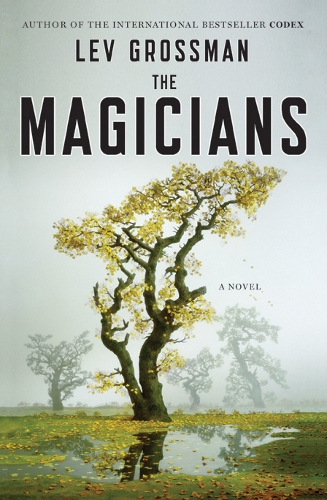
The Magicians by Lev Grossman
There are, however, some prerequisites needed for you to fully enjoy this book. The first is you have to have read The Chronicles of Narnia by C. S. Lewis, if not in its entirety, then at the very least more than The Lion, The Witch, and the Wardrobe, and most assuredly NOT the movies. Second, you should be familiar with the Harry Potter franchise, in this case the movies or the books are fine. Third, you have to be an avid reader of fantasy, understand it's many cliches in and out, and be somewhat open minded about them. Fourth, I gotta say that you have to be at least over the age of 16 but I'd college experience is highly recommended.
Now before you get ahead of yourselves and go bitching to me about how I'm trying to censure you, read that first sentence again "...for you to fully enjoy this book". Hell, you could not know who CS Lewis or Harry Potter are, never read a fantasy book in your life , and be 12 and I'll bet you might still enjoy this book. You certainly won't catch a lot of the little things, but the writing is solid, and the story is well laid out.
Anyway, this book was unexpected for me. I have a list going of books that I see around my work that interest me and that eventually I need to read, usually I just pick the next book off that list and read that at work, but here I found myself drawn to it. Maybe it was the title--I'm a sucker for magicians anything--maybe it was the fact that one of our competitors broke the laydown date and got us to sell it three days early, or maybe it was the intense endorsement by Martin
"These days any novel about young sorcerers at wizard school inevitably invites comparison to Harry Potter. Lev Grossman meets the challenge head on ... and very successfully. The Magicians is to Harry Potter as a shot of Irish whiskey is to a glass of weak tea."
whatever the reason I read the jacket and dived in.
As I've said on more than one occasion I'm not a fan of book reports, I don't like spoilers, nor do am I very good at summarizing so I'm just gonna talk about what I felt about it. The old adage "Imitation is the highest form of flattery" is so extraordinarily accurate in this case that whoever came up with it must have known this book was coming out. What I mean is this: Grossman has essentially recreated Narnia, mated it with Hogwarts, and thrown in some Tolkien genes. He's said in several interviews that he was absolutely in love with Narnia as a child and wanted to recreate it as an adult with more adult themes, especially the idea of fantasy wearing away as you grow up. He did this with a masterful touch, his characters are nihilistic college kids who essentially have everything, brains, magic, love, etc. but want more. How real is that? We all grow up with these fantasies of changing the world, of how cool and amazing being an adult will be, the absolute kickass-ness of being in college, but what happens? We find out that it all actually kinda sucks. We end up going to college, but within a month the novelty wears off and we're once again in a class room learning about things that we don't care about. Being an adult? Yeah, no kid ever thinks of responsibility or if they do it's in a naive way. Paying bills, having relationships, school, work, social life, everything that goes along with being an adult seems neat, sure, but then it happens and it's just.. blah. We look around after 5 years, 10 years, 40 years, and what have we done with ourselves? Nothing. We work or go to school (both usually), we go home, we eat, we sleep, but there's no real magic to any of it. What happens to that feeling we all get in our stomach about the future? Those butterflies that say everything is going to be amazing tomorrow? They get blindsided by reality. They don't exist. We began to question why we're here, what we're doing with ourselves, whats the point of it all; fall into drugs, alcohol, sex, and depression. This is what being an adult is. It's not magical animals talking to you, fantastic voyages and adventures, it's not fair maidens or evil villains, life is just life. No more. No less. Lev Grossman takes this idea, this horrible realization and puts it in a world where some of those things actually exist. What happens? The characters STILL aren't happy, they're still depressed, they're still nihilistic, and essentially they're still unhappy. What Grossman accomplishes is perhaps one of the best social satires of our generation. The generation of tomorrow, the generation of selfishness, the generation of why.
He's right too. We read fantasy to escape the world, we read it to go some place where things are happy, full of adventure and meaning, but really, would we even be happy there? Is it even possible for us to be happy or even satisfied with anything? He takes Narnia, Hogwarts, and Middle Earth and shows us that, no, we won't ever be happy. Sure it sounds dark, it sounds awful, but it's realistic. It may be exaggerated, most things are after all, but he hit the nail on the head. Us 20 somethings are so dissatisfied with everything that we're losing sight of what really matters. The people we love, our friends, our family, husbands, wives, and kids. We spend so much time trying to be better, trying to find something more, escaping from our own worlds that we lose that which gives our lives the meaning they desperately need. The Magicians is quite the eye opener, at least it was for me. I'm exactly what he described with his book, I have the exact same mentality of these kids, and honestly.. it was both horrifying and hilarious all at the same time. Absurd even.
The best part about it, though, was the fact that unlike dusty old fiction books, The Magicians was stupendously entertaining. Even if you don't read for themes, for so called "deeper meanings", you'll have a hell of a time trying to put his down. The characters are fantastic, you love them, you hate them, and most importantly you connect with them. The world is familiar, both in the sense of the "real world" and that of a Narnia-esqe settings, and the plot is well thought out and well executed. Although some may feel that his almost blatant plagiarism is a turn off, I found that combined with his message it was done not out of malice, but out of love for those works he was so inspired by. Some may think he was just taking Narnia and adding to it for his own monetary gains, but I would have to disagree. Sure there are huge, HUGE similarities between Fillory and Narnia, things are fundamentally different. At times I was a little put off, sure, but looking back on it now after a few books and a month of pondering, I was put off by the realistic tones of the story. I picked up the book, looked at the fantasy label, and assumed it would be just another great happy-go-lucky piece of work, that was quickly shattered. He not only made fun of my mentality, as well he should have, but also that of every fantasy author out there, of every college student, of every person, he managed to criticize things we all have in common in such a way as to make us love and hate him. Some people just criticize, like myself, and people hate them.. but Lev Grossman does what every satirist dreams about, actually accomplishes his criticisms of live, love, and human nature, in a way that people LOVE. It's brilliant!
I'll say this though, it's not for those that are looking for the same old fantasy. It's not for those who like tame stories, or those looking for certain things, it's for those that are almost fed up with the Fantasy cliches, fed up with people, fed up with life. It'll bring you around, lemme tell ya, but like all things it has to be taken with a grain of salt, and an open mind.
Friday, July 31, 2009
Tyrannosaur Canyon by Douglass Preston
Every reader out there has their "guilty pleasures", the books that they read just for fun, for me those are mystery/thrillers. For sure I read sci-fi/fantasy far, far more, but that's because I enjoy it more, it occupies more of my mind, but with mysteries I can just kinda kick back with a nice easy read and let go. They aren't particularly difficult and a lot of the time the twists are rather predictable, but it's fun! Back in my junior year my physics teacher--who also happens to be my across the street neighbor--introduced me to a great pair of authors: Douglas Preston and Lincoln Child. They both are distinguished solo authors, but they teamed up to write an absolutely fantastic series of mystery/thrillers. They also have a couple of novels that aren't part of the series that are amazing as well. I've read all but Riptide and after reading their latest Cemetery Dance I just had to get another one. It had also been a little while since I picked up a mystery and I needed a little break from the usual stuff. Unfortunately Page One, the local used book store here, was out of Riptide so I decided to get Tyrannosaur Canyon which is one of Preston's solo novels.
I don't know what it is about these guys, but even this solo novel had me hooked from page one! Generally I try and stay away from books set here in New Mexico, or even the Southwest, because I don't particularly like the culture that is overloaded in books about it. Not everyone here is a cowboy or an Indian, nor do we all love turquoise and silver jewelry. And no, I don't own any Indian pottery or rugs. So I was a bit hesitant to read it, but it turned out okay. For one the novel was set in Abiquiu, New Mexico, which is a small uber rural town up north. The characters were the usual innocent who witnesses a murder, the ex-con who's being used by a rich mastermind, and an ex CIA agent trying to redeem himself. One thing I think I should mention is that both Preston and Child are very into academia, in other words, they know their shit. One worked at the New York Natural History Museum, the other various other scientific places, so even though the story is fiction, a lot of the science is real. Which really helps when you have authors like Dan Brown out there fucking up their facts. This also helps with the fact that the majority of mystery books out there are kinda cookie cutter, different character names, different places, but overall the same plot. Although Tyrannosaur Canyon is similar to those others, it is also unique in its presentation.
The story follows the innocent cowboy who catches the ex-con killing a lone prospector in a remote canyon, the cowboy manages to revive the prospector long enough for him to hand over a notebook full of numbers and asks for that to be given to his daughter. Seeing as cowboys are very morally sound, he calls the police, but refuses to hand over the notebook and instead goes off on his own to try and figure out what happened. This leads him to the ex-CIA agent who, like most mystery supporting characters, is trying to hide from his past, this time by becoming a monk in a secluded dessert monastery. And so the hunt is on to unravel just what this notebook is for, why it's important enough to kill for, and all at the same time run from the ex-con who is trying to kill them. During the course of the book a side story emerges about the rich mastermind in which we are given more clues as to just what is going on. Since it is a mystery I won't bother with any more plot stuff, but instead I'm going to say that anyone in need of a good mystery that will throw you on it's masterful twists and turns, should pick up Tyrannosaur Canyon.
That's the other thing, unlike a lot of other mysteries, the actual mystery remains so until the very last minute, and even then your jaw will drop with the authors ingenuity. It had me staying up later than usual wanting to find out just what happened and thankfully it wasn't a let down at all! I don't know why, but I've found that when reading Preston and Child, and now just Preston, I always want to do the various careers featured in the book. After reading their first two books I was convinced I wanted to work in a museum, and then I wanted to work for the FBI, then the NYPD, then a journalist, the list goes on and on, but it always amazes me how they can make a rather dry, boring job seem really interesting. The same goes for this book, after reading it I really wanted to major in GEOLOGY and work for a lab analyzing rocks.. seriously. Geology is neat and all, but it is not a subject I particularly enjoyed in high school, nor in the various classes it's come up. For him to actually make me want to get a PhD in Geology is really something. I might just be easily swayed, but thankfully it doesn't last long, especially given the fact I look into the various fields and realize it's not that great. Major, major props to both Preston and Child though, because it takes a very good author to portray a boring-ish job in such a way to make the reader want to do that. It's one of the reasons I've read all of their books and now that I know Preston can write on his own, probably all his books. Next up I'll probably pick up a Child book and see how it stacks up. It was fascinating to see Preston's own style; it's easy to see where his own stuff comes through in their co-author books, but I must say, by himself he is not as good as with Child. I'm going to guess it's the same with the other one and that their own styles mate in such a way to make a fantastic book! If you don't do anything more than just go look at their books my mission has been accomplished. I yearn to introduce people to authors I like and hope that they will like them too, because really reading is magical and everyone should do it!
Friday, July 3, 2009
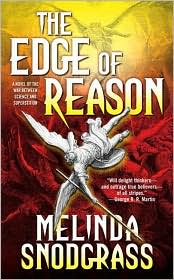
The Edge of Reason by Melinda Snodgrass
"Will delight thinkers--and outrage true believers--of all stripes"
He tells me, basically, that she bashes every major world religion AND governments. Say no more my friend, say no more! Unfortunately for them it was new so I decided to hold off and pick it up with my discount at my work, but in the meantime another guy overhears us who was on break and brings up L. Ron Hubbards book Battlefield Earth. Yikes, Hubbard, really? Whole load of crazy right there. They both assure me that this one was pre-psycho lets start a religion Hubbard and I also remembered that my uncle read most of his pre-crazy books as well and like them, so for 2 bucks I picked it up. I haven't started it yet, but it should be.. an interesting experience to say the least. Hopefully I can keep my bias out of it and just try and enjoy it as a good piece of sci-fi. I'll let you guys know.
So crazy cult leaders aside, this book was amazingly entertaining! Before I go into the plot and symbolism's of the book I have to get some dumb things out of the way. Now I have no right to criticize anyone on their writing, grammar, or mechanics since I suck horribly at all three, but as a reader I have certain expectations of the authors I read. I expect that, as a professional, you won't have too many silly typos/misspellings, I expect that if this isn't your first book that your plots aren't as see through as a third graders, and I expect that your sentence structure and syntax are much more complex than that of a middle schooler. Ms. Snodgrass does a good job with most of the stuff, but I felt myself getting distracted by a rather way of talking. It wasn't horribly confusing just a couple points needed to be re-read so I was comfortable with what I read, there were some silly mistakes here and there, probably due to her editor being lazy over her, and the biggest down to her book was the fact that she kinda gave everything away within the first 100 pages. The grammar and poor editing aside, seeing an author tell all about a plot and the characters so early in a book is a major turn off. There were a couple surprises in the end, and obviously this one is a start of a series so the end itself was rather eh. By the way I took this book because the rest of the series isn't out so I have time to read my other stuff! Generally though aside from some flattish characters--whom I expect will be developed more further in the series--and a plot given away like a drunk virgin, it was a good book.
Like I've said before I'm not going to write a book report for you guys, if you're intrigued by it go pick it up! The thing that made me the happiest was the fact that she grouped ALL of the religious together, she wasn't picking on one over the other, she came right out and said that the entire idea of religions is stupid. Not only that, she made religion and their "gods" into evil creatures using superstition and stagnation to enslave mankind. Indeed one of the major characters is named Cross and he's guess who? Jesus Christ! But really he's a powerful "old one" whom has been converted to the side of reason and logic. The kickass thing about Cross that Ms. Snodgrass uses to attack religions even more is this: He's a schizophrenic! That's right, he's been here since we evolved and based on the cultural view of wherever he is he becomes either Jesus for Christians, Yehoshua for the Jews, and Allah for the Muslims. So not only are these stupid religious people fighting each other under THE SAME GOD, but they're being controlled and enslaved by every "god" throughout human history. She addresses one of the major things I have a problem with in Christianity which is the fact that in the Old Testament God was an asshole. He killed us, punished us, made us suffer, and overall enjoyed it, this is, she explains, because that's how these creatures thrive ff human suffering. Until one of the other major characters comes in and changes the view of a spiteful angry god into that one of compassion these creatures used holy wars and all those awful things that happened to become stronger. Christians always tend to play off those atrocities as God "testing us", but in reality they were doing it for their own pleasure. Oh man she did it so eloquently and so masterfully that I totally let most of her almost poor writing go and gave her a 7/10 on my list. Another theme that played a smaller role in the book was that of corruption and how if you have enough money you could be the most evil, vile person on the world and get away with anything. It also addressed aspects of homophobia, race, and family.
If you're iffy on religion or hell even if you are religious I think it's a great book to pick up! She's a lot meaner than, say, Christopher Moore's Lamb, but there are things Snodgrass brings up that need to be addressed. Hell it got a good review by the great George R.R. Martin that alone should compel any fantasy fan to pick this up!
Monday, December 15, 2008
Ry Recommends
- Anthem by Ayn Rand ~ This is a must read for anyone even slightly interested in dystopian fiction. It totally compares to Orwell's Nineteen Eighty-Four and Huxley's Brave New World, and actually does something different with the genre. I'm not sure when or even how it happened, but I became utterly enthralled with the whole dystopian scene, I re-read Orwell and Huxley, picked up the "grandfather of dystopian novels" We by Yevgeny Zamyatin, Atwood, and this literary crack eventually led me to which I talk about later on here. One of the great things about Anthem is the fact Rand hadn't yet fully developed her philosophy, which she stuffs into her later novels. The other fantastic aspect to her novel here is the style. Rand writes a book in essentially first person, but in a world where first person doesn't exist. It's crazy intense and honestly must have been amazingly difficult to accomplish, yet she does it with ease. I'm not going to try and summarize Anthem because it would be far too easy to spoil various aspects, I'll just say that if you liked Orwell and Huxley read Rand!
- Choke by Chuck Palahniuk ~ Vile, wretched, disgusting, disturbing, classic Chuck! I picked up Choke I was still in a way a Palahniuk virgin -I had only read Fight Club at the time- which, as anyone who's read Palahniuk knows, is considerably "lighter" compared to his usual style. Chuck breaks all the rules on what "fiction" should be, this isn't Jane Austin or Steinbeck, he crosses every line there is, sex, morals, God, suicide, abortion, you name it and Chuck will open your eyes. This being said, he does it with a certain taste, as much taste as you can have, anyway, when your main character is a sociopathic con artist who just happens to be addicted to sex. Definitely a fun read, though, and especially refreshing for anyone who's used to the main stream book scene. Not for the squeamish, religious, morally sound, easily offended person. Once you go Chuck, you never go back.
- Elantris by Brandon Sanderson ~ This was Sanderson's debut novel and also the novel that won over Robert Jordan's widow enough to choose him to write the final book in the Wheel of Time series. I've always been surprised when an author can actually pull off writing a fantasy book in only one book, but Sanderson does just that, and he does it well. was a very well written book and definitely gave a unique view on fantasy, one which, I for one, enjoyed immensely. Though, since it was Sandersons first book, it is a bit unpolished, which doesn't really take away from the story much, just something to note if you're a neurotic reader and can't stand even minor mistakes. Sanderson has an acclaimed series out now which I'll probably pick up when I have more time, but if you're looking for a nice light fantasy check out Elantris.
- The J-Curve by Ian Bremmer ~ This was the first political science book I've ever read, and although there were several non-fiction books I enjoyed more--such as by MalcolmGladwell-- but Bremmers book was by far the most insightful. As I've said here, I have this weird obsession with dystopian societies and while reading The J-Curve I realized a few things. First of which is that North Korea is just a stones throw away from being a classic Orwellian society, the reason it isn't, though, is the very premise of Bremmers book. The more closed a society is, the harder it is for said society to stay stable, so the only way for closed societies to stay stable is to become more and more closed. This is exactly why the U.S. foreign policy is so wrong, by putting these sanctions on countries like Cuba and North Korea, we enable them to stay even more authoritarian and keep these dictators in power. We need to help these countries move to global openness, democracy will by its nature throw these dictators out of power. If only the people running our foreign policy would read this book, but maybe someone who goes into foreign policy will read this and keep it in mind and someday change the world! (Ha as if I'm that influential)
- Lamb by Christopher Moore ~ Generally I haven't read a whole lot of comedy books, but Lamb was recommended to me by a friend so I thought I'd give it a shot. Strictly speaking, I suppose, it isn't really a comedy book, it's really a fiction with a good flare of comedy and satire. That being said, Moore is a fantastic author, his style is clean and strong, his descriptions are amazing, and he can write satire with the best of them. Basically Lamb is about Christs childhood all the way up to his crucifixion, and even though I'm not the most religiously educated person, this was hilarious! It's written by Christ's best friend Biff, who is resurrected by a ditsy angel to tell his story. Whether you're religious or not Lamb is a lighthearted good read, and will give anyone a good laugh. The hardcover is even printed as a Bible look-alike, all the way down to the little strip of ribbon used to mark your page!
- Next by Michael Crichton ~ First let me start out by saying that Crichton was by far one of the best authors of our generation, and when he died on November 5h, 2008 we were all deeply dismayed. He will be missed. Next is a techno-thriller set in what could be the very near future--as the majority of his novels are--and follows several bioengineering plot lines. At first they all seem to be independent, but Crichton, as usual, ties up all the strings in the end magnificently. Though this isn't quite the genius that was Jurassic Park it is a fantastic look at the future of bioengineering and the possible ramifications of messing around with DNA. Anyone interested in science with a flair of mystery/thriller should check out Next, especially those interested in biology.
- Night Angel Trilogy by Brent Weeks ~ After you've read 6+ fantasy books you began to see a pattern. Indeed many themes reoccur in fantasy, young innocent character has secret power, found by a 'mentor' type and told to save the world from certain doom, goes on hero's quest to save world, gains companions to help share the load, fights evil with newly discovered powers, saves the day. It's actually really disappointing after awhile, you end up looking for books that do this the best. I picked up Brent Weeks first book on a whim, and too my delight, he did something I've never seen with a fantasy. That being he made it super dark, the main character not only in conflict with "evil" but part of the evil. This is one of my favorite new authors, he did something new and refreshing, and dark with a now overpopulated genre. Not only that he made a character you love to hate, as well as a whole cast of unique companions. This is by far a must read for anyone looking for something new in the fantasy world.
- Requiem for a Dream by Hubert Selby Jr. ~ I had seen the movie with Jared Leto a couple times before I read the book, but nothing could prepare me for just how intense the book was. I know better than anyone that books are far better than the movies based off them, but holy hell. This was like the difference between an amoeba and a human brain! Selby goes into some of the darkest aspects of humans nature; from addiction to obsession, and he does it in such a way you feel the characters pain. It's brilliant, but terribly depressing. By far one of the most depressing books I've ever read, up there with A Child Called It--which more than anything is depressing because it's a true story-- yet the same can probably be said about Requiem. Sure not the same characters or the exact same experiences but the human tragedy is all too real. Dark, depressing, morbid, graphic, but something I think that everyone should read if for nothing more to open their eyes to what can happen and most likely does happen in our country.
- Revelation Space Trilogy by Alastair Reynolds ~Let me be clear here, the books I'm talking about are indeed Reynolds Trilogy (Revelation Space, Redemption Ark, and Absolution Gap), but also Chasm City which is part of the same universe. In any case, I picked up the first book just out of curiosity because I didn't really know what a Space Opera was. I was seriously glad I did. The crazy part is the fact that this is Reynolds first set of books! I have recently become fairly obsessive about colonization recently, and this trilogy is what colonization could do for the human race some day! Granted it's rather far fetched, but oh man how amazing would something like this be? Reynolds isn't the run of the mill sci-fi author, he writes what is called hard sci-fi, which basically everything in his books is possible. Indeed, Reynolds has a PhD in Astronomy and worked for the European Space Agency through last year, so it's certainly closer to being real than, say, The Matrix. Reynolds also writes in a fairly dark manner, especially when you think that his scenarios could very well be true.
- Snow Crash by Neal Stevenson ~ This was the first cyberpunk I've ever read and good god it was amazing! Cyberpunk is a branch of Sci-Fi that combines "high tech with low life", (thanks wiki), which means hackers in almost dystopian futures. The story follows a hacker named Hiro Protagonist, I know real clever Stevenson, who is also a Japanese martial arts enthusiast. This is probably one of the other reasons I enjoyed Snow Crash so much, I have a strange obsession with Japanese history especially martial arts if you don't know me, Stevenson combines a fantastic dark, humorous, fun future with great fight scenes. Much of the book takes place in something called The Metaverse , which is essentially the Internet at it's most intense; think Matrix minus the killer machines. I really can't do Stevenson justice in his plotting because he masterfully combines several stories, that in the end somehow all wrap up in the end. Basically Hiro and his street punk friend Y.T. discover a drug called Snow Crash that not only kills your computer, but completely screws up hackers minds. That's the other thing I loved about this book, Stevenson is one of those authors that knows what he's talking about and does his research if he doesn't. Even though Snow Crash came out in '92 many of the psychological, anthropological, linguistical, and even technological ideas are still relevant and insightful today. I'd recommend Snow Crash to anyone interested in technology, sci-fi, even dystopian-esque books, really I think everyone should read it or at least give it a shot!